
WELCOME BONUS 300%
UP TO €2000 + 100
FREE SPINS
UP TO €2000 + 100
FREE SPINS
Home → Blackjack
Blackjack at Golden Lady Casino: Variants, Rules and Payouts
Double Down vs Simple Hit on 11
When holding an 11, a player can choose to double down or take a simple hit. The Blackjack Split / Double / H17 rule set allows doubling down for a double bet, receiving only one more card. This offers a strategic advantage, particularly when facing a dealer's upcard of 2 through 10. A correct decision here impacts the overall Return to Player (RTP).
The RTP for Blackjack can be influenced by rule variations like Double After Split (DAS), which improves it by approximately 0.14 percentage points. This option, when available, enhances strategic flexibility for players holding an 11 against certain dealer upcards. Understanding these modifiers is key to maximizing potential returns in the long run.
Choosing to double down on 11 when permitted, as per the DAS rule, can lead to a better outcome than a simple hit in many scenarios. This strategic choice is fundamental to basic strategy and affects the house edge. For a $10 bet, a successful double down can yield $20 in winnings, compared to $10 for a standard hit.
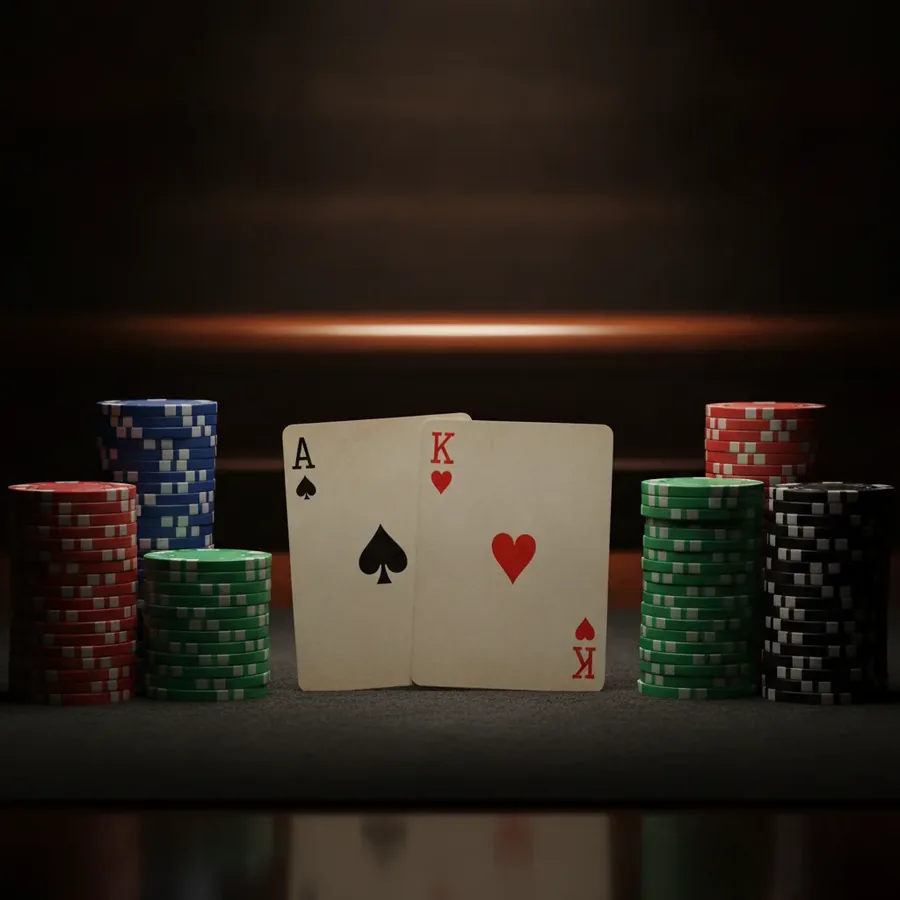
Shoe, Cut Card, and 75 Percent Penetration
The game setup in some Blackjack variants involves a shoe with multiple decks, and a cut card is used to determine the end of the shoe. When the dealer reaches the cut card, the shoe is reshuffled. A 75 percent penetration means that approximately three-quarters of the cards are played before reshuffling, influencing the game's dynamics.
A lower number of decks, such as one deck compared to eight, can decrease the house advantage by approximately 0.48 percentage points. While 75 percent penetration in an 8-deck shoe is common, the number of decks used is a more significant factor for the house edge. This means fewer decks generally benefit the player.
The concept of shoe penetration, like the 75 percent figure, relates to how many cards are dealt before a reshuffling. This impacts card counting strategies and the overall variance of the game. However, the payout structure, such as 3:2 versus 6:5, has a more substantial effect on the house edge than penetration alone.
Six Card Charlie Pays Immediately with Six Cards
The 'Six Card Charlie' rule, when in play, offers an immediate win if a player achieves a total of six cards without busting. This rule provides an alternative winning condition beyond reaching a higher total than the dealer. It is a specific variant that can enhance player opportunities without altering the core blackjack objective.
While 'Six Card Charlie' is a distinct rule, the RTP of a blackjack variant is more heavily influenced by factors like the payout for a blackjack itself. For instance, Blackjack Auszahlung 6:5 reduces the RTP significantly by 1.39 percentage points compared to 3:2. This makes the payout ratio a more critical consideration.
The presence of a 'Six Card Charlie' rule can be seen as a minor advantage for players, especially in situations where hitting multiple cards is strategically sound. However, it does not change the fundamental house advantage calculations derived from the number of decks or payout ratios. Players should prioritize understanding standard blackjack strategy first.
Blackjack doesn't count for every bonus offer
When considering bonuses, it is important to note that not all table games contribute to wagering requirements. For example, table games typically contribute only 10% to the wagering requirement of a bonus offer. This means that players focusing on blackjack may need to wager significantly more to clear the bonus.
Slots, on the other hand, contribute 100% to the bonus wagering requirement. This stark difference means a €100 bonus with a 40x wagering requirement would necessitate €4,000 in slot play. For table games at 10%, this translates to a substantial €40,000 in wagers to meet the same requirement.
The welcome bonus at Golden Lady Casino is a 300% welcome bonus up to €2,000 plus 100 free spins. Understanding game contribution rates is crucial for effectively utilizing this offer. Players should verify which games qualify for full or partial wagering credit before engaging in play.
Splitting costs double bet: plan budget
When a player decides to split their hand, such as two eights, the cost of playing doubles. Each split hand requires a bet equal to the initial wager. For instance, splitting a hand that started with a €10 bet means two hands are now in play, each requiring a €10 bet, totaling €20.
The rule variation 'Double After Split' (DAS) allows a player to double down after splitting their cards, further impacting strategic decisions and bet sizing. This option, if available, can improve the RTP by approximately 0.14 percentage points, offering more ways to potentially profit from a split hand.
Players must account for the increased bet requirement when splitting, especially when working with a fixed budget. A €10 initial bet that becomes €20 after a split means that budget must accommodate the doubled stake. This is a key consideration for managing funds effectively during play.
Blackjack variants at a glance
| Variant | Payout | House edge | Rule | Bet range |
|---|---|---|---|---|
| Blackjack Insurance / Versicherung (6–8 Decks) | 92.53% | 7.47% | Separate Nebenwette bis 50% der Hauptwette, wenn der Dealer ein Ass hat. Basisstrategie schreibt IMMER Ablehnung vor (außer Karten zählen bei True Count ≥ +3). Bei einem Deck Vorteil ≈ 5.88% | Insurance 2:1 |
| Blackjack Split / Double / H17 – Regel-Effekte | n.a. (Regel-Modifikatoren) | H17 +0.22 Prozentpunkte; RSA −0.08 Prozentpunkte; DAS −0.14 Prozentpunkte | Dealer Hits Soft 17 verschlechtert RTP um 0.22 Prozentpunkte; Resplit Aces verbessert um 0.08 Prozentpunkte; Double After Split verbessert um ca. 0.14 Prozentpunkte; 6 Decks statt 8 – ca. 0.02 Prozentpunkte. | Double – Einsatz ×2 mit einer Karte; Split – bis 4 Hände; Ass-Split meist mit einer Karte. |
| Blackjack Surrender (Late Surrender) – Regel-Effekt | n.a. (Regel-Modifikator) | −0.08 Prozentpunkte | Spieler gibt Hand nach Dealer-Blackjack-Prüfung auf, verliert die Hälfte des Einsatzes. Verbessert RTP um ca. 0.08 Prozentpunkte. Early Surrender ist wesentlich wertvoller (bis −0.6 Prozentpunkte), aber extrem selten. | Rückzahlung 50% des Einsatzes |
| Blackjack Liberal Vegas Strip (liberale Regeln, 3:2) | 99.72% | 0.28% | Günstigste Regelkombination: S17 + DAS + Resplit + Late Surrender. Standardabweichung 1,15 | Blackjack 3:2, Gewinn 1:1 |
| Blackjack 6 Decks, S17, DAS, DOA, Auszahlung 3:2, Basisstrategie | 99.54% | 0.46% | Dealer steht auf Soft 17; Verdopplung auf jeder Zweierkarte; Verdopplung nach Split erlaubt; keine Aufgabe. Basisstrategie ist für diesen Wert zwingend | Blackjack 3:2, normaler Gewinn 1:1, Insurance 2:1 |
| Blackjack Ein Deck, klassische Regeln, 3:2 | 99.85% | 0.15% | Weniger Decks = niedrigerer Vorteil; ein Deck gibt ca. −0.48 Prozentpunkte gegenüber 8 Decks. Oft durch 6:5 Auszahlung kompensiert. | Blackjack 3:2, Gewinn 1:1 |
Even Money only possible with Dealer Ace
A dealer Ace can trigger the option for an even money payout in some Blackjack variants. This refers to a situation where the player's initial two cards total 21, and they can choose to receive their winnings immediately at a 1:1 ratio rather than waiting for the dealer's hand to complete. For instance, a player holding a natural Blackjack with the dealer showing an Ace might opt for this immediate payout.
This specific payout scenario is directly tied to the dealer's upcard being an Ace, a critical moment in determining player options. While some games offer higher payouts like 3:2 for a Blackjack, the 'even money' choice is a specific decision presented to the player. It avoids the risk of a push or a loss if the dealer also achieves a Blackjack.
The decision to take even money versus letting the hand play out can impact the overall RTP if not considered strategically. For example, taking even money when the dealer has an Ace prevents the possibility of a push where neither player nor dealer wins or loses. This choice is a tactical one available in certain Blackjack games.
When can you increase your bet?
Increasing your bet in Golden Lady Casino's Blackjack games is generally tied to specific table rules and player actions, rather than a universal feature across all games. For example, in Blackjack 6 Decks with Double After Split (DAS) enabled, a player can double their bet on specific hands. This rule allows for strategic betting adjustments.
The option to double down after splitting a pair, known as DAS, is a key rule that enables a player to increase their bet. This is particularly relevant in games like Blackjack Liberal Vegas Strip, which features a favorable combination of rules including DAS. Such rules empower players to manage their wagers more dynamically during play.
In certain Blackjack variants, such as those allowing Double After Split (DAS), a player has the opportunity to double their initial bet on their first two cards or after a split. This strategic bet increase is a core mechanic for players aiming to capitalize on favorable situations, as seen in games like Blackjack Liberal Vegas Strip. This offers a way to potentially amplify winnings on a strong hand.
Place Side Bet before cards are dealt
Side bets in Blackjack, such as the Blackjack Insurance bet, must be placed before the initial two cards are dealt to the player and the dealer. This applies to all side bet options available, including those found in various Blackjack variants. The insurance bet, for example, is offered when the dealer's upcard is an Ace.
The Blackjack Insurance side bet is a separate wager, typically up to 50% of the main bet, and is only available when the dealer shows an Ace. This bet pays out at 2:1 if the dealer has Blackjack. However, according to basic strategy, this side bet should generally be avoided unless card counting indicates a significant advantage.
Placing side bets like Blackjack Insurance before the cards are dealt is a critical procedural step. This ensures the bet is valid and settled according to the game's rules. In games featuring side bets, such as those available on the platform, this timing is paramount for the wager to be recognized and processed.
How many decks are in the shoe?
The number of decks used in the shoe can vary across different Blackjack games offered at Golden Lady Casino, impacting the house edge. For instance, Blackjack 6 Decks utilizes six decks, contributing to a house edge of 0.46%. Other games may employ a different number of decks, altering the fundamental probabilities.
A single-deck Blackjack game, operating under classic rules with a 3:2 payout for Blackjack, boasts a significantly lower house edge of 0.15%. This contrasts with games using more decks; for example, an increase from 8 to 6 decks results in a marginal difference of approximately 0.02 percentage points to the house edge. Fewer decks generally mean a lower house advantage.
The specific Blackjack variant determines the number of decks in play. Games like Blackjack 6 Decks use six decks, while other versions might offer single-deck play with a more favorable RTP of 99.85%. Understanding the deck count is crucial as it directly influences the game's statistical properties and the player's long-term expected return.
How much time is left for the decision?
Live Blackjack games at Golden Lady Casino incorporate time limits for player decisions to maintain game flow and accommodate multiple players. For example, Evolution's Lightning Blackjack, which accommodates unlimited players, features time constraints for each player's turn. This ensures that the game progresses efficiently, even with a high number of participants.
The need for swift decisions is particularly evident in live dealer environments like Quantum Blackjack Plus Live by Playtech, which also allows for unlimited players. While specific timings can vary, players typically have a short window, often around 10-20 seconds, to make their move after cards are dealt. This contrasts with online versions where time is less restricted.
In live dealer settings such as Blackjack Party by Evolution, a lively atmosphere is maintained with two hosts, but decision time remains a factor. Players are expected to act promptly, typically within a few seconds, to ensure the game continues smoothly for everyone at the table. This pacing is standard across most live dealer Blackjack titles.
What a Natural Blackjack Practically Pays Out
A natural Blackjack, achieved with two cards totaling 21, typically pays out at 3:2. For instance, a 10 EUR bet on a Blackjack hand at a 3:2 payout table would result in a 15 EUR win. This payout structure is standard for many Blackjack variants, offering a favourable return to the player. The alternative 6:5 payout, seen in some games, significantly reduces this return.
The difference between a 3:2 and a 6:5 payout is substantial, impacting the casino's house edge. A 6:5 payout on a 10 EUR bet yields only 12 EUR, a 3 EUR reduction compared to the 3:2 rate. This change adds approximately 1.39 percent points to the house advantage. Such a reduction in payout is a critical factor for players to consider before placing a bet.
For example, Blackjack Ein Deck with classical rules offers a 3:2 payout and an RTP of 99.85%, resulting in a house edge of just 0.15%. Conversely, Blackjack Auszahlung 6:5 (6 Decks) drops the RTP to 98.15%, increasing the house edge to 1.85%. Players aiming for better returns should prioritize tables with the 3:2 payout.
Bet two percent of bankroll per hand
A sensible approach to managing your funds involves betting no more than two percent of your total bankroll per hand. For a bankroll of 1,000 EUR, this translates to a maximum bet of 20 EUR per hand. This strategy is designed to extend your playing time and mitigate the impact of short-term variance. Adhering to this limit is crucial for responsible gambling.
The house edge, which averages a retained portion of the stake, can be managed effectively with sound bankroll management. Even a small house edge of 0.46%, as seen in Blackjack 6 Decks with S17, DAS, DOA, can deplete a bankroll quickly if betting limits are exceeded. Keeping bets low ensures that individual losses do not cripple your overall playing capital.
Consider the Blackjack Liberal Vegas Strip variant with an RTP of 99.72% and a house edge of 0.28%. If playing with a 500 EUR bankroll and adhering to the two percent rule, your bet would be 10 EUR per hand. This allows for 50 hands before even considering a single loss, offering a buffer against the casino's inherent advantage.
Ignored Basic Strategy Chart: 1 Percent Wasted
Failing to utilize a basic strategy chart in Blackjack can result in a significant increase in the house edge. For instance, neglecting basic strategy can effectively add around 1 percent to the casino's advantage. This is particularly relevant for games like Blackjack 6 Decks, where a house edge of 0.46% exists even with optimal play.
The impact of not following basic strategy is substantial, especially when considering variants with lower inherent house edges. For example, Blackjack Liberal Vegas Strip has a competitive house edge of 0.28% when played correctly. Ignoring basic strategy on such a game would negate its advantages and make it less favourable for the player.
Players who disregard basic strategy might find themselves facing a considerably higher house advantage than anticipated. The Blackjack Surrender variant, for instance, has a house edge modifier of -0.08 percent points when played optimally, improving the RTP. Not employing basic strategy here would likely negate this benefit and potentially increase the house edge.
Bonus 100 EUR with 10 percent credit
A welcome bonus of 300% up to 2,000 EUR plus 100 free spins is offered. If a player deposits 100 EUR, they receive a bonus credit of 300 EUR, for a total of 400 EUR to play with. Table games contribute only 10% towards bonus turnover requirements. This means that for every 10 EUR bet on a table game, only 1 EUR counts towards wagering.
To meet the wagering requirements for a 300 EUR bonus, with a 10% contribution from table games, a player would need to bet 3,000 EUR on table games (300 EUR bonus / 10% contribution = 3,000 EUR). This calculation highlights the significant turnover required when focusing on games with lower contribution rates like Blackjack or Roulette.
Given the 10% contribution rate for table games, players wishing to clear the bonus primarily through these means will face a substantial wagering challenge. For example, to clear a 100 EUR bonus at a 10% rate, a total of 1,000 EUR in bets must be placed on qualifying table games. Slot games, contributing 100%, would only require 100 EUR in bets for the same bonus amount.
Check table limit before the first bet
Before placing any bet, it is essential to verify the table limits for the specific game you intend to play. For example, Lightning Blackjack at Evolution allows bets ranging from 1 EUR to 2,500 EUR, while Quantum Blackjack Plus Live by Playtech has limits from 1 EUR to 5,000 EUR. These ranges indicate the minimum and maximum wagers accepted per hand.
Understanding these limits is crucial for managing your bankroll effectively, especially when considering the bonus wagering requirements. A bet on Blackjack Party at Evolution, with limits from 1.00 EUR to 1,000 EUR, must be considered in relation to the 10% game contribution. Betting the maximum 1,000 EUR on this table would only count as 100 EUR towards the bonus turnover.
For players seeking to maximize their playing time or clear bonus wagering, knowing the table limits is paramount. A player with a 1,000 EUR bankroll and aiming to bet 2% per hand would wager 20 EUR. This bet size is well within the limits of most available Blackjack tables, including the higher-stakes options like Quantum Blackjack Plus Live, allowing for flexibility.
Contact
Live - online chat
Banking









Providers












Golden Lady Casino 2026